
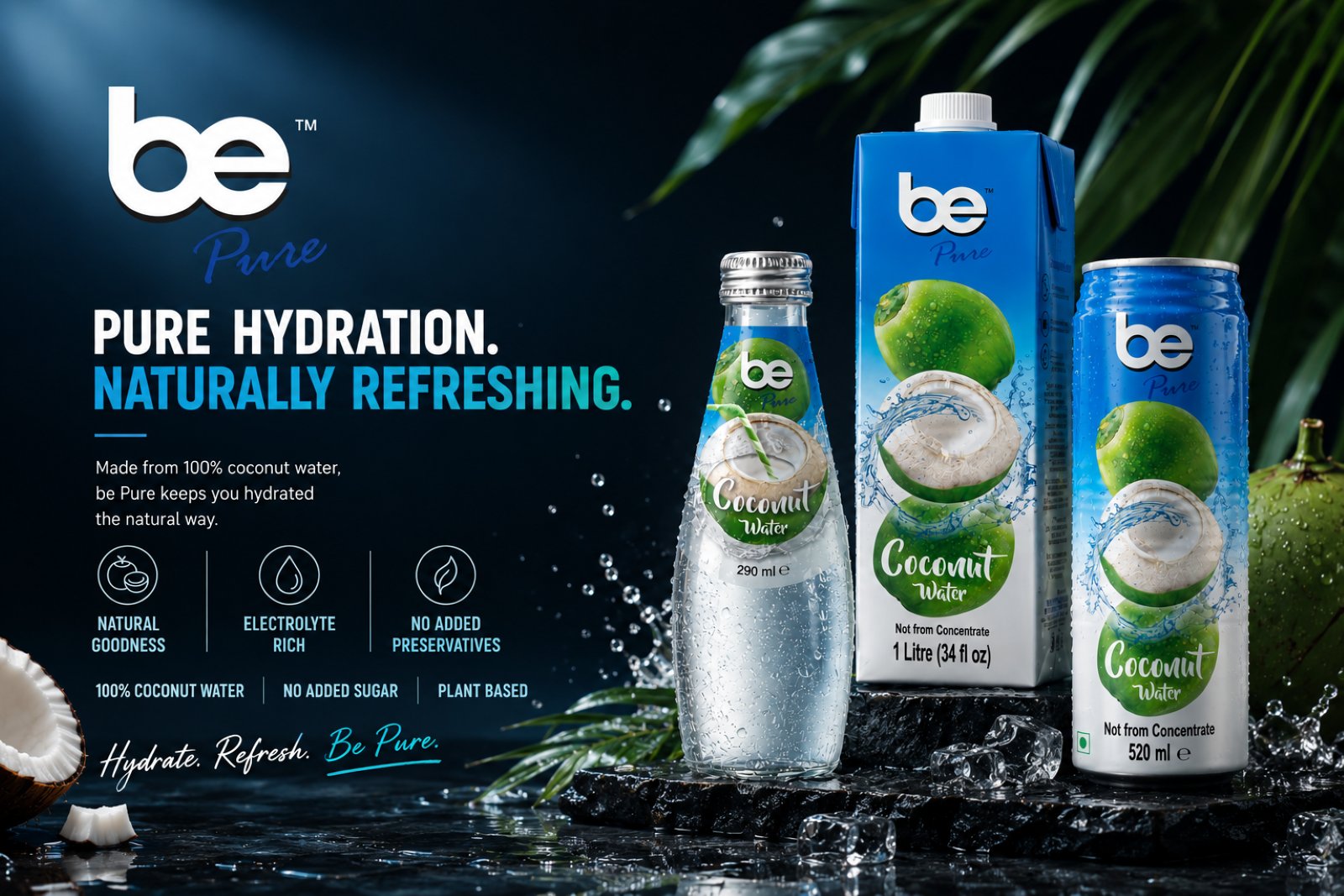
Choosing the right coconut water packaging is about more than appearance. The packaging you select can influence product protection, shipping efficiency, shelf presentation, consumer convenience, and overall brand positioning.
Today, coconut water is commonly packaged in aluminum cans, aseptic cartons (Tetra Pak®-style cartons), and glass bottles. Each format offers distinct advantages depending on your target market, distribution channel, and product strategy.
For example, aluminum cans are widely used for convenient ready-to-drink beverages, aseptic cartons are popular for family-size products and international export, while glass bottles are often preferred for premium retail, cafés, hotels, and restaurants.
In this guide, we compare the three most common coconut water packaging formats, explain their strengths and limitations, and help you choose the most suitable option for your business or private-label project.
Why Packaging Matters for Coconut Water Quality
Coconut water is a low-acid, nutrient-rich liquid that is naturally vulnerable to oxidation and microbial spoilage once extracted from the nut. Unlike syrupy juices or carbonated drinks, it has almost no built-in preservatives, so the barrier properties of its packaging directly affect:
- Flavor retention — protecting the light, slightly sweet, slightly nutty taste from oxidation
- Shelf stability — preventing spoilage during long-distance export
- Nutrient preservation — retaining electrolytes like potassium and natural sugars
- Light and oxygen exposure — both accelerate degradation of taste and color
With that context, let’s look at how each packaging format performs.
1. Tin / Aluminum Cans for Coconut Water
Coconut water can packaging has become increasingly popular, especially for export brands targeting retail and convenience channels.
Pros:
- Excellent barrier against light and oxygen, helping preserve flavor
- Lightweight, which reduces freight costs compared to glass
- Infinitely recyclable, supporting sustainability claims
- Strong shelf presence with vibrant printing options
- Fast cooling, ideal for on-the-go and chilled retail formats
Cons:
- Requires an internal lining (commonly BPA-free epoxy or polymer) to prevent the acidic coconut water from reacting with the metal
- Higher tooling and minimum order quantities for custom can sizes
- Once opened, contents must be consumed relatively quickly
Cans work especially well for brands targeting convenience stores, gyms, and single-serve retail, where a cold, ready-to-drink format matters more than extended ambient shelf life.
2. Tetra Pak (Aseptic Carton) for Coconut Water
Tetra Pak coconut water is the most widely used format globally, and for good reason — it’s purpose-built for aseptic, shelf-stable beverages.
Pros:
- Multi-layer construction (paperboard, aluminum foil, polyethylene) blocks light, oxygen, and moisture almost completely
- Enables long ambient shelf life (often 9–12 months) without refrigeration, which is critical for export and long-haul shipping
- Lightweight and stackable, optimizing container space and reducing logistics costs
- Lower carbon footprint per unit compared to glass, and increasingly recyclable through carton recycling streams
- Wide range of sizes, from single-serve 200ml portions to bulk formats
Cons:
- Requires aseptic filling equipment, a significant capital investment for manufacturers
- Printing customization, while good, is generally less premium-looking than glass or printed cans
- Perceived by some consumers as less “premium” than glass packaging
For B2B buyers and private label brands building an export-ready supply chain, Tetra Pak remains the most practical and cost-efficient choice — particularly when working with an experienced coconut water manufacturer in Thailand capable of aseptic processing.
3. Glass Bottles for Coconut Water
Glass packaging is most common in premium, boutique, or hospitality-focused coconut water brands.
Pros:
- Completely inert — no chemical interaction or flavor transfer with the coconut water
- Premium look and feel, well suited for hotels, spas, and high-end retail
- Fully recyclable and reusable, which appeals to eco-conscious consumers
- Excellent at preserving the natural, delicate flavor profile
Cons:
- Heavy, which significantly increases freight costs, especially for export
- Fragile — higher breakage risk in transit
- Higher per-unit production cost
Glass is best suited for local or regional distribution, premium hospitality channels, or markets where cold chain logistics are already in place.
Side-by-Side Comparison
Each packaging format offers different advantages. The best choice depends on your target market, brand positioning, product size, distribution channel, and shipping requirements. While all three formats can deliver high-quality coconut water, each is designed for different commercial needs.
| Factor | Aluminum Can | Aseptic Carton | Glass Bottle |
|---|---|---|---|
| Shelf Life | |||
| Light Protection | Moderate | ||
| Shipping Efficiency | Very Good | Moderate | |
| Breakage Risk | Low | Very Low | Higher |
| Retail Appeal | Very Good | Premium | |
| Branding Options | Very Good | Very Good | |
| Family-Size Formats | Limited | Limited | |
| Hospitality Use | Good | Moderate | |
| Export Suitability | Good | ||
| Best For | Convenience stores, gyms and modern retail | Export, supermarkets and family use | Hotels, cafés and premium retail |
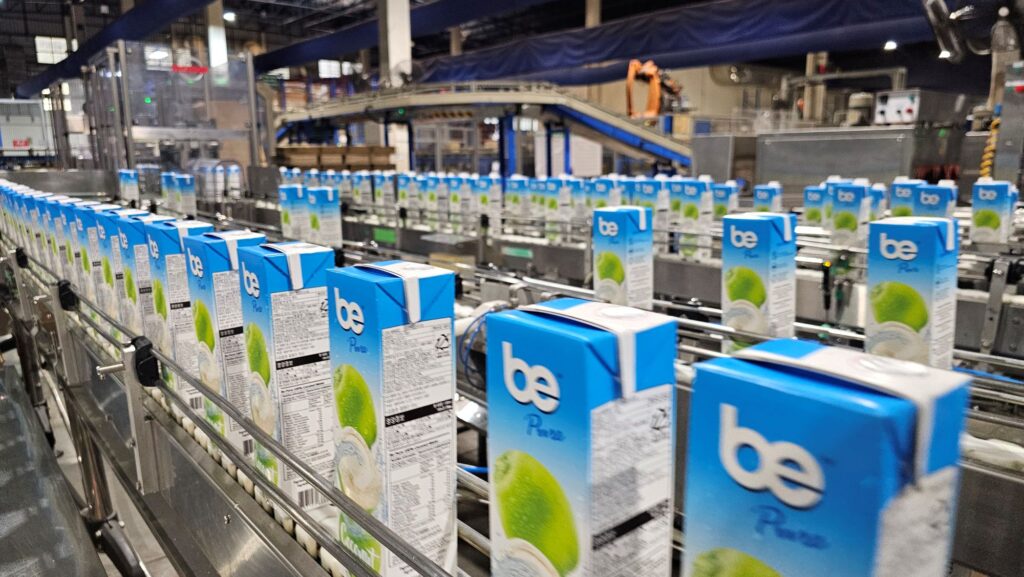
Inside Our Manufacturing Facility
Every package of coconut water passes through carefully controlled production and quality inspection before shipment.
Our manufacturing process includes:
- Beverage filling
- Thermal processing
- Quality inspection
- Carton packing
- Export preparation
Which Packaging Is Right for Your Business?
Different sales channels often require different packaging formats.
Convenience Stores
Aluminum Can
Supermarkets
Aluminum Can or Aseptic Carton
Hotels & Resorts
Glass Bottle
Restaurants & Cafés
Glass Bottle
Gyms & Fitness
Aluminum Can
Family Consumption
1 L Aseptic Carton
Export Distribution
Aluminum Can or Aseptic Carton
Premium Retail
Glass Bottle
Frequently Asked Questions
Which coconut water packaging is best for export?
Aluminum cans and aseptic cartons are generally the most efficient choices for export because they are lightweight, durable, and easy to transport internationally.
Is canned coconut water safe?
Yes. Modern beverage cans are manufactured with food-grade internal linings and are widely used for commercial beverages around the world.
Why do premium brands use glass bottles?
Glass bottles provide a premium appearance and are commonly chosen for hotels, restaurants, cafés, and specialty retail where presentation is important.
Can I choose different packaging for private label?
Yes. Private-label customers can choose the packaging format that best suits their target market, subject to production capabilities and minimum order quantities.
Final Thoughts
There is no single packaging format that is ideal for every coconut water brand. The right choice depends on your target market, distribution model, product positioning, and logistics requirements. By understanding the strengths of aluminum cans, aseptic cartons, and glass bottles, you can select the packaging that best supports both your product quality and long-term business goals.
Looking for a trusted coconut water manufacturer in Thailand? Contact our team to discuss the most suitable packaging solution for your market.
Explore our Coconut Water products, learn more about our OEM & Private Label services, or contact us to discuss your next coconut water project.
Leave a Reply