
Thailand has long been associated with coconuts and authentic Southeast Asian cuisine. Today, Thai coconut milk is used far beyond traditional curries — it has become an important ingredient for restaurants, food manufacturers, retailers, and consumers around the world.
For importers, distributors, and private label brands, choosing an experienced coconut milk manufacturer in Thailand gives access to quality Thai coconuts, established food-processing expertise, and export-ready products.
At BE Coconut, we supply Thai coconut milk and coconut cream for international markets, with different richness levels and OEM/private label options for qualified projects.
Why Source Coconut Milk from Thailand?
Thailand has a well-established coconut industry and extensive experience processing coconut-based foods and beverages.
For international buyers, sourcing directly from Thailand offers several advantages:
- Access to Thai coconuts close to the source
- Established coconut-processing expertise
- Different coconut milk and cream richness levels
- International food safety standards
- Export experience for global markets
- OEM and private label opportunities
Thai coconut milk is also closely associated with authentic Thai cooking, giving it strong recognition in supermarkets, Asian grocery stores, restaurants, and foodservice markets worldwide.
Coconut Milk vs Coconut Cream: What’s the Difference?
One of the first decisions for an importer is choosing the right richness level.
The main difference between coconut milk and coconut cream is the coconut fat content and resulting richness. A lighter product works well when a smoother, less creamy consistency is preferred, while higher-fat coconut milk or cream delivers a richer texture and stronger coconut character.
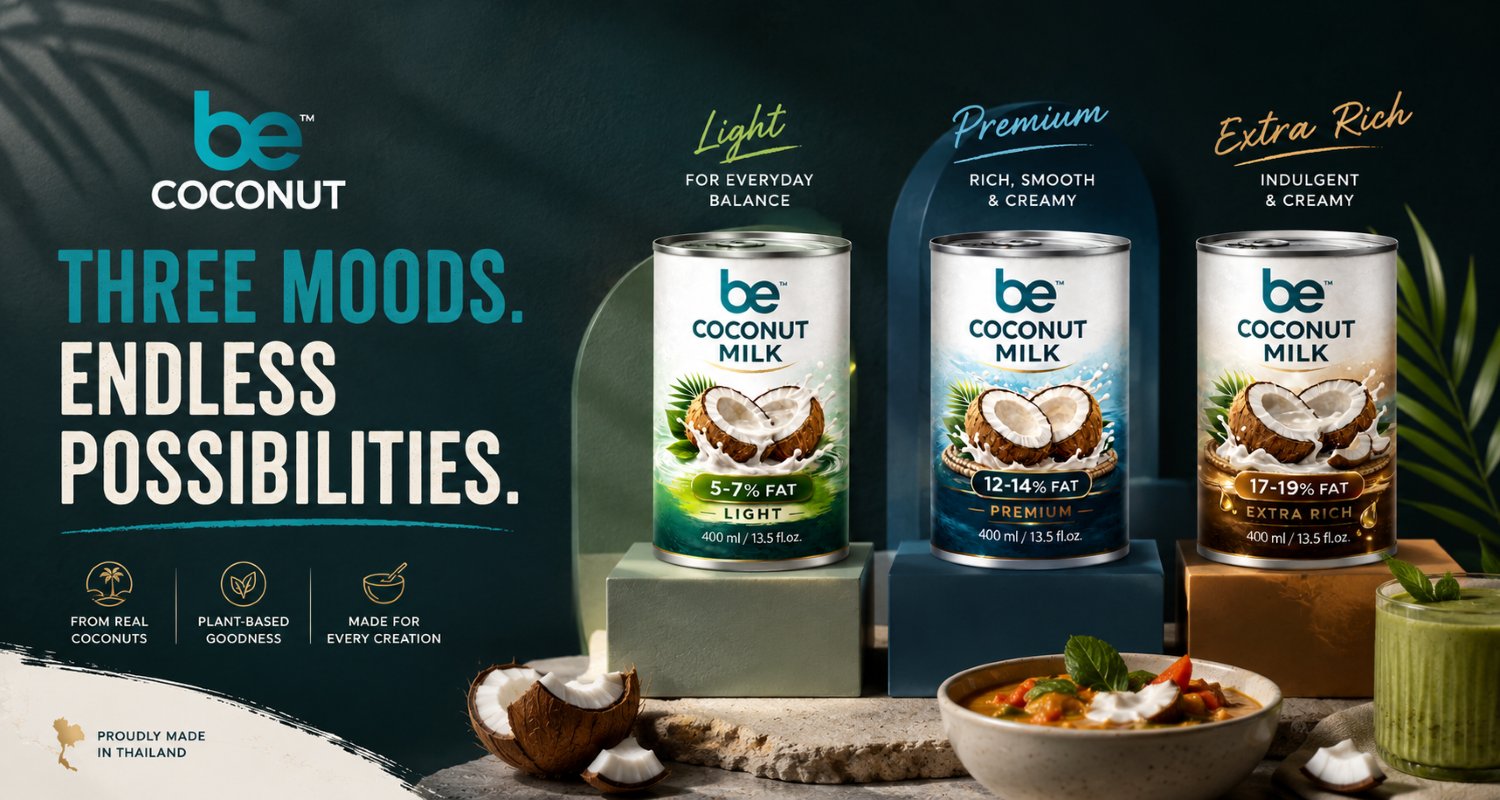
BE Coconut offers three options:
Light – 5–7%
A lighter choice for applications where buyers want coconut flavor without excessive richness.
Premium – 12–14%
A versatile option that balances creaminess and usability. It works well for everyday cooking and a broad range of recipes.
Extra Rich – 17–19%
Our richest option, designed for applications that require a fuller, creamier texture and more indulgent coconut profile.
Offering different fat levels also allows importers and retailers to target different consumer preferences and price points within the same product category.
More Than Thai Curry
Coconut milk is extremely versatile.
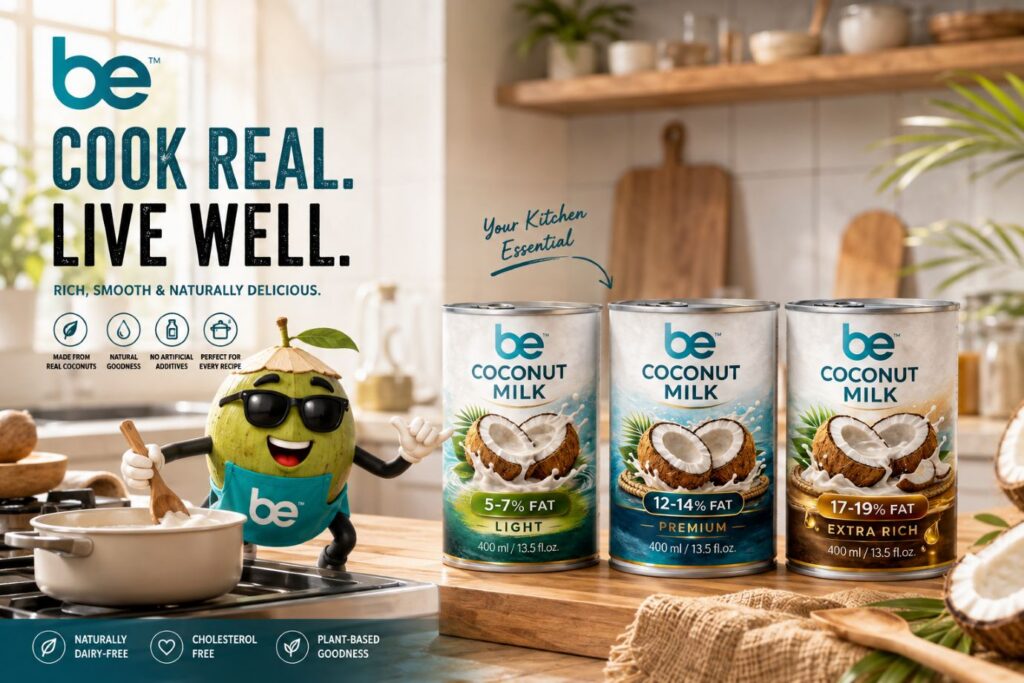
While it remains essential for many Thai dishes, its applications extend much further. Coconut milk and cream can be used for:
- Curries and soups
- Sauces
- Desserts
- Baking
- Smoothies and beverages
- Ice cream and frozen desserts
- Food manufacturing
- Restaurant and foodservice applications
Growing interest in plant-based foods has also introduced coconut milk to consumers who may not regularly cook Asian food.
This versatility makes coconut milk an attractive category for importers because one product can appeal to multiple consumer groups and sales channels.
OEM & Private Label Coconut Milk in Thailand
For retailers and brands developing their own coconut range, working with an OEM coconut milk manufacturer in Thailand can simplify the process.
Instead of investing in your own production facility, you can work with an experienced manufacturer to produce coconut milk or cream under your own brand.
Depending on the project and volume, private label services can include:
- Custom branding
- Private label packaging
- Different coconut milk richness levels
- Export carton requirements
- Product and export documentation
Packaging MOQ should be discussed early in any private label project. Custom printed packaging normally requires minimum printing quantities, which may differ from the minimum production quantity.
Learn more about BE Coconut OEM & Private Label Manufacturing.

What Should Importers Look for in a Coconut Milk Manufacturer?
Choosing a supplier should involve more than comparing prices.
1. Product Consistency
Importers need consistent taste, texture, color, and fat content from shipment to shipment.
Ask your supplier about specifications and quality-control procedures before placing a commercial order.
2. Food Safety Standards
Food safety is especially important when supplying supermarkets, distributors, and foodservice customers.
Buyers should check which manufacturing standards and certifications are available and whether they meet the requirements of the destination market.
3. Product Options
Different markets may prefer different levels of richness.
Working with a supplier that offers several coconut milk and cream specifications gives buyers more flexibility when building their product range.
4. Export Experience
Manufacturing the product is only part of the process.
An experienced Thai coconut milk supplier should also understand commercial export documentation, product specifications, packing details, shipping requirements, and the information international importers need before placing an order.
5. Private Label Capability
If you plan to sell coconut milk under your own brand, discuss packaging MOQ, artwork, specifications, production quantities, and lead times before starting the project.
Clear communication at the beginning can prevent delays later.
Coconut Milk for Retail and Foodservice
Coconut milk is suitable for several distribution channels.
Retail-sized packs work well for supermarkets, Asian grocery stores, specialty stores, and online retailers. Larger-volume orders can serve restaurants, catering businesses, and food manufacturers.
Importers should therefore consider how the product will be used before selecting the right specification.
For retail, packaging design and shelf presence become particularly important. For foodservice and manufacturing, consistency, functionality, cost, and reliable supply may carry more weight.
Thai Coconut Milk for International Markets
Demand for coconut-based products now extends well beyond Southeast Asia.
Coconut milk is familiar to consumers across Asia, Europe, North America, the Middle East, and other international markets. Its connection with Thai cuisine provides an established foundation, while plant-based eating has opened additional opportunities.
For importers, this means coconut milk can serve both the traditional Asian-food category and the wider plant-based food market.
Why Work with BE Coconut?
BE Coconut supplies coconut-based foods and beverages from Thailand to international buyers.
Our Coconut Milk & Cream range is made from real Thai coconuts and available in three richness levels:
Light 5–7% | Premium 12–14% | Extra Rich 17–19%
Products are suitable for cooking, baking, beverage applications, retail, and foodservice, with OEM and private label options available for qualified projects.
Explore our Coconut Milk & Cream range for more product information.
Looking for a Coconut Milk Manufacturer in Thailand?
Whether you are an importer, distributor, retailer, foodservice buyer, or private label brand, the right manufacturing partner can help you build a reliable coconut milk range for your market.
If you are looking for a coconut milk manufacturer in Thailand, contact BE Coconut to discuss your required richness level, packaging, order quantity, destination market, and private label requirements.
Contact BE Coconut to discuss your next coconut milk or coconut cream project.
Leave a Reply